


Second Hand Temporary Structures: Buy With Confidence

Choosing the right second hand temporary structures can give corporate teams a practical route to reusable event space without starting from scratch. Yet price should never drive the decision alone. Condition, inflation technology, included equipment, branding compatibility, site requirements and future logistics all affect long-term value. For conferences, exhibitions, roadshows and brand activations, well-maintained ex-hire stock can suit repeat programmes when the structure matches the brief.

Optix periodically releases used inflatable structures from its rental fleet as stock is renewed. Buyers should therefore assess each available asset individually, confirm exactly what is included and compare ownership against hire or new purchase before committing budget to a structure for event programmes.
What Are Second Hand Temporary Structures?
The phrase covers a surprisingly broad market. Search results can combine portable buildings, event shelters, inflatable venues and every kind of modular unit under one label. Those products may solve completely different problems. A corporate buyer should therefore compare structure type, intended use and operating method before comparing headline prices.
Within the Optix range, second hand temporary structures means selected ex-hire inflatable architecture rather than conventional portable buildings. Current used stock includes Domes, Cubes, an Air Roof, Luna Pods and inflatable Wall systems. Optix says structures can be offered individually or with a more complete equipment package.
Second Hand Temporary Structures vs Conventional Portable Buildings
Searches for ex hire temporary buildings, second hand portable buildings and used portable cabins commonly return rigid offices, welfare units or storage products. Those aren’t the same as Optix inflatable event architecture. Inflatable structures use pressurised structural elements or airflow systems to create temporary space for events, meetings, activations and similar corporate applications.
What Does Ex-Hire Mean for an Inflatable Structure?
Ex-hire means the asset has previously formed part of a rental fleet. Optix says it renews hire inventory while maintaining structures for future events. That process creates opportunities to purchase selected used units. Because availability changes, buyers should verify the current listing through the Optix Used Inflatables page before planning around a particular structure.
Why Consider Ex-Hire Inflatable Structures for Corporate Use?
Repeat events can make ownership commercially attractive. A company running annual conferences, travelling exhibitions or recurring activations may benefit from controlling a reusable asset. However, an inflatable event venue shouldn’t automatically be called a semi-permanent structure. Deployment duration, specification and local requirements determine how a project should be treated.
Used inflatable architecture can also extend an existing asset’s productive life. That offers a more credible sustainability argument than simply calling second-hand equipment “green”. Corporate procurement teams should consider transport, cleaning, maintenance, storage and expected utilisation. Reuse creates value when the structure remains suitable and genuinely replaces unnecessary new production.
Why Used Temporary Structures Can Suit Repeat Corporate Programmes
Recurring registration zones, hospitality areas, exhibitions and roadshows can benefit from consistent event architecture. That model differs from industrial temporary structures and other industrial structures, where storage capacity, vehicle access and operational loads may dominate the brief. Corporate event spaces place greater emphasis on visitor experience, presentation, branding and repeat deployment.
Getting More Utility From Existing Event Architecture
A second working life makes commercial sense when condition and functionality remain appropriate. Think of the structure as reusable event infrastructure rather than temporary decoration. Utilisation matters greatly. An inexpensive structure used once and stored for years can prove poorer value than a carefully selected asset deployed repeatedly across a planned programme.
Which Second Hand Temporary Structures Does Optix Offer?
At the time of writing, the live Optix used-stock page lists a 10m Inflatable Dome, 15m Inflatable Cube, 12 × 6m Inflatable Air Roof, two Luna Pods, a 12m O Wall, I Walls and 12m U Walls. Stock can change when individual structures sell.
That distinction matters when researching temporary structures. Someone looking for a second hand temporary warehouse, storage marquee or conventional temporary warehouse needs a different product category. Optix’s listed second-hand range centres on inflatable event architecture for corporate environments rather than pallet storage, industrial warehousing or rigid portable accommodation.
Used Inflatable Domes for Temporary Corporate Spaces
The current used inventory includes a 10m Air Flow Dome with sealed Air Beam supports. Optix’s standard 10m Dome data gives 56m² of floor space, with reference capacities of 83 standing and 45 seated. Actual event capacity should still consider furniture, staging, production equipment and circulation.
Second Hand Inflatable Cubes for Contemporary Event Environments
A 15m Inflatable Cube is also listed within current used stock. The standard 15m Cube specification provides 185m² of floor space, with published reference capacities of 229 standing and 123 seated. Buyers should confirm the exact used unit’s condition and included equipment separately before purchase.

Used Air Roofs for Stages and Open Corporate Areas
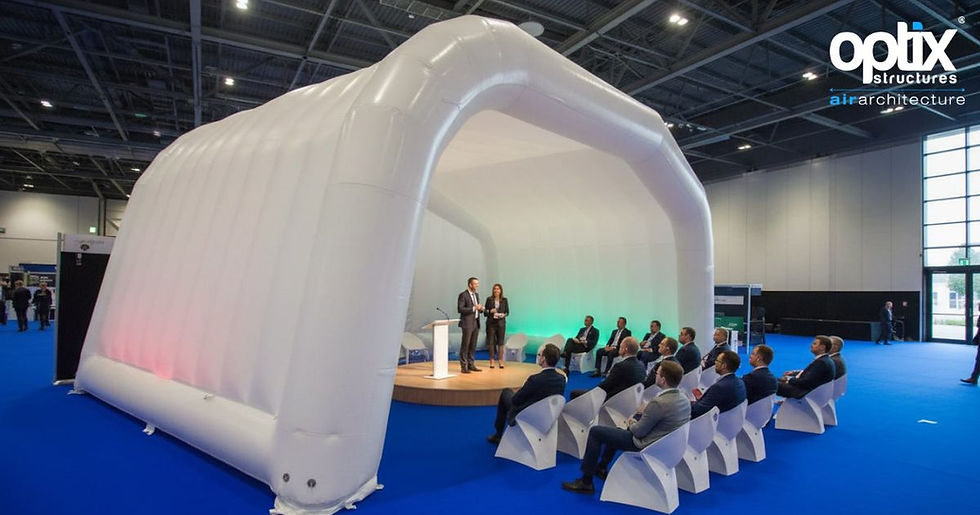
The current 12 × 6m Air Roof listing provides an open-sided alternative for presentations and event environments. Optix publishes 57m² of floor space for its standard 6 × 12m model. It can fulfil a different role from a conventional used temporary canopy, particularly where branded architecture and modular event presentation matter.
Ex-Hire Luna Pods for Compact Corporate Spaces
Luna Pods suit smaller event footprints. Optix publishes dimensions of 5.5 × 4.5m × 2.8m high for its standard Luna, giving 13m² of floor space. Reference capacity is 12 standing or eight seated. The current used-stock page lists two ex-rental Luna units.

Used Inflatable Walls for Flexible Venue Zoning
Inflatable Walls address another common corporate challenge: dividing existing venues quickly. Optix describes its wall system as modular and linkable, with applications across conferences, exhibitions and roadshows. Current used stock includes O, U and I Wall configurations, giving buyers several ways to create temporary zones.

Current used Optix structure | Published or typical role | Important buyer check |
10m Inflatable Dome | Registration, meetings, hospitality and activations | Condition, technology, equipment package and branding |
15m Inflatable Cube | Exhibitions, branded venues and corporate events | Exact configuration, flooring, doors and site footprint |
12 × 6m Air Roof | Stages, presentations and open event areas | Power, anchoring, flooring and site conditions |
Luna Pods | Compact meetings, registration and activation areas | Quantity, equipment, condition and access |
Inflatable Walls | Venue zoning, partitions and breakout areas | Length, linking layout, lighting and electrical requirements |
Current availability should always be checked through the Optix Used Inflatables inventory because ex-hire assets can leave stock after sale.
How Do You Choose the Right Used Structure for Your Project?
Start with what the space must achieve. A product launch may need presentation sightlines and media positions. A conference breakout room needs comfortable circulation and useful seating. A roadshow demands repeatable logistics. When function comes first, size and structure selection become much easier to defend during corporate procurement.
Price comparisons can otherwise become misleading. A buyer searching secondhand warehouse for sale or semi permanent warehouse may prioritise vehicle access and storage volume. A clearspan frame marquee follows another structural concept again. Event-focused inflatable architecture should instead be assessed around people, programme, branding, site conditions and deployment.
Start With Purpose Before Comparing Second Hand Structures
A useful project brief should define attendance, activity, event dates, site location, available footprint and whether installation is indoors or outdoors. Access and surface type also matter. These practical details allow a supplier to judge whether the structure can operate effectively rather than merely fitting on a drawing.
Match Inflatable Structure Design to the Corporate Application
Different shapes support different experiences. Domes create enclosed focal spaces. Cubes offer strong geometric presentation. Air Roofs keep stages and audiences visually connected. Luna Pods suit smaller zones. Inflatable Walls divide existing interiors. Choosing by purpose gives procurement teams a stronger basis than selecting whichever used item happens to be available.
Check Indoor, Outdoor, Surface and Space Requirements
Site planning deserves early attention. Ground conditions influence anchoring or ballast while indoor venues introduce ceilings, columns, access routes and fire-safety systems. UK HSE guidance highlights ground capacity, anchoring, weather and safe audience movement when planning temporary structures. Review the HSE venue and site design guidance for relevant UK considerations.
What Should You Check Before Buying an Ex-Hire Structure?
Condition should carry more weight than age alone. Inspect the structure as working event equipment. Fabric surfaces, seams, inflation components, closures, packing equipment and known repairs may affect future use. Buyers should also confirm what comes with the sale because replacing missing operational components can change the real acquisition cost.
Product classification matters too. Terms such as PVC covers, roller shutter door and personnel door commonly belong to framed storage buildings or warehouse-style structures. Optix doesn’t list those features for its used inflatable range. Introducing unrelated specifications would make the comparison less useful and could create inaccurate expectations for corporate buyers.
Inspect Condition Beyond First Impressions
A clean surface is reassuring, though it isn’t the whole inspection. Review fabric condition, connection points, inflation systems, doors or closures and accompanying ground protection. Ask about known repairs or servicing requirements. Optix describes its currently advertised used structures as being in good or great condition, depending on the listing.
Verify Dimensions, Capacity and Configuration
Published capacities provide useful reference points, not final event layouts. Furniture, staging, AV systems, entrances and required circulation all occupy floor space. Corporate planners should map the intended layout before purchase. A structure with sufficient stated area can still feel crowded when production requirements are added later.
Confirm Technology and Operating Requirements
Optix currently documents Air Flow, Sealed Frame and Air Beam technologies. Air Flow requires constant fan power. Sealed Frame uses an inflated sealed framework and requires no running power once inflated. Air Beam combines airflow with sealed structural beams. These systems differ operationally, so the exact technology must be confirmed.
Understand Exactly What the Sale Includes
Optix states that used structures may be sold as complete packages or as structures alone. Current listings mention different combinations of fans, pumps, packing bags, ground sheets and closure components. That variability makes a written equipment schedule valuable before purchase. Never assume one used listing defines every other package.
Check Compliance and Site Responsibilities
Ownership doesn’t remove event-safety responsibilities. UK HSE guidance stresses using temporary structures within defined operating limits and monitoring environmental conditions during use. US requirements vary between jurisdictions. The 2024 International Fire Code includes temporary and air-inflated membrane structures within Chapter 31, although locally adopted requirements must still be confirmed.
What Equipment and Extras Come With Used Optix Structures?
The supporting package can materially affect both budget and deployment. Current Optix used listings show combinations of fans, pumps, ground sheets, packing bags and closure components. Depending on the unit, additional options may include ballast or anchoring, flooring, freestanding doors, remote-controlled lighting and electrical distribution equipment.
Those details also prevent false comparisons. A clearspan marquee for sale or second hand warehousing marquees may use rigid frames and different access systems. A simple temporary canopy may require far less equipment. Corporate buyers should compare complete operational solutions rather than placing every temporary enclosure in one pricing basket.
Included Equipment Varies Between Used Inflatable Structures
For example, the current 10m Dome listing includes fans, a packing bag, electric Air Beam pump, ground sheet, inflatable air-door closure and zip-in night sheet. Other structures have different equipment schedules. The safest approach is to request confirmation against the precise asset before procurement approval.
Anchoring, Flooring and Door Systems Need Separate Attention
Relevant used listings show ground anchors or ballast, flooring and freestanding door systems among available extras. These items can change how polished the final environment feels. They may also affect transport, setup and site planning. A corporate venue should therefore be budgeted as a complete space rather than an inflatable shell alone.
Lighting and Electrical Distribution Shape the Finished Space
Lighting can turn neutral architecture into a recognisable corporate environment. Optix lists remote-controlled lighting and electrical distribution among extras for several current used assets. Electrical planning should also account for production, registration systems and AV requirements. Coordinating these needs early reduces last-minute cable routes and improvised power arrangements.
Which Inflatable Technology Are You Actually Buying?
Inflation technology affects much more than setup. It influences power requirements, packed size, operating noise and behaviour during power interruption. Optix documents three construction approaches: Air Flow, Sealed Frame and Air Beam. Corporate buyers should record the exact technology alongside dimensions, condition, accessories and intended operating environment.
That technical distinction separates inflatable architecture from a storage marquee or conventional clearspan frame marquee. Rigid framed products rely on different structural systems. Inflatable structures use air pressure within structural cavities or components. Comparing them purely by floor area ignores the practical differences that influence installation, transport and event operations.
Optix technology | Inflation equipment | Running power | Published ballasted wind figure | Main operational characteristic |
Air Flow | Fans | From 6 amps | Up to 34mph | Continuous airflow maintains inflation |
Sealed Frame | Pump | Not required after inflation | Up to 37mph | Sealed framework operates silently |
Air Beam | Pumps and fans | From 4 amps | Up to 55mph | Airflow structure gains sealed Air Beam support |
These are Optix’s published technology-level figures and shouldn’t be treated as guaranteed limits for every second-hand unit or installation. Always confirm the exact structure and project conditions through the Optix Inflatable Technology comparison.
Air Flow Inflatable Structures
Air Flow uses a constant supply of air from integral fans. Optix publishes inflation from one minute, running power from six amps and operating volume from 30dB for this category. Continuous electrical supply therefore forms part of normal operation, which should be reflected in production and contingency planning.
Sealed Frame Inflatable Structures
Sealed Frame structures use an integral sealed air-tube framework. Optix states that these structures can be inflated using a manual or electrical pump and need no running power afterwards. Their silent operation can be attractive for meetings, interviews and presentation spaces where continuous fan noise might be distracting.
Air Beam Technology and Structural Support
Air Beam technology combines Air Flow with sealed structural beams. Optix explains that the additional beams increase wind-load capability and provide an integral temporary fail-safe if power is lost. Its technology table publishes ballasted wind speeds up to 55mph for this category, subject to the correct structure and conditions.
Why Technology Matters When Buying Used Temporary Structures
The operating method influences transport, electrical infrastructure, noise, deployment and contingency planning. Procurement teams should therefore ask for the technology specification rather than simply recording “inflatable structure”. That small distinction helps operations staff prepare realistic site requirements and prevents assumptions based on visually similar equipment with different technical characteristics.
Can Second Hand Temporary Structures Be Rebranded?
Branding can substantially extend the commercial usefulness of a second-hand structure. Optix currently offers colour lighting, spotlight branding, temporary graphic application, removable printed Dome covers, projection branding and direct printing across compatible products. The right method depends on structure type, ownership model and campaign duration.
For corporate teams, flexibility matters. A neutral structure may need to represent different campaigns, partners or business units throughout its life. Temporary graphics, projection or colour lighting can support changing identities. Permanent direct print suits a more stable brand programme. Compatibility should always be confirmed before artwork production begins.
Temporary Applied Branding for Changing Campaigns
Optix’s temporary application method uses artwork printed onto adhesive media and applied while the inflatable structure is erected. This can suit short campaigns or changing sponsor requirements because the branding doesn’t need to become part of the structure permanently. Exact suitability should still be checked for the chosen asset.
Removable Printed Covers for Suitable Domes
Optix offers removable exterior printed covers for rental or purchased Dome structures. These covers sit over the outside of the Dome and provide reusable large-format branding. A second-hand Dome should be checked for cover compatibility before artwork is commissioned because not every used asset should be treated as interchangeable.
Projection and Lighting Can Keep Branding Flexible
Projection can place logos or changing digital content onto inflatable surfaces while remote-controlled lighting can reflect corporate colours. These methods become useful when campaign messages evolve between events. They can also reduce dependence on permanent graphics, particularly where one structure serves different business units or sponsors throughout the year.
Direct Printing Usually Needs Earlier Commitment
Direct printing integrates graphics into the structure’s surfaces. Optix positions this method for more extensive branding, including purchased and custom-designed solutions. Because the artwork becomes much more permanent, it suits stable long-term identity better than frequently changing campaigns. Existing second-hand units shouldn’t be assumed suitable for retrospective direct printing without confirmation.
Second Hand vs New vs Hire: Which Makes Commercial Sense?
The lowest acquisition price doesn’t always create the lowest total cost. Used ownership introduces transport, installation, storage, cleaning and maintenance responsibilities. Rental can reduce long-term asset management. New purchase offers greater specification freedom. Optix also provides Managed Purchase for clients who want ownership without handling every physical stage themselves.
Search terminology can muddy that decision. Buyers researching a semi permanent warehouse, second hand temporary warehouse or second hand warehousing marquees usually have storage-led priorities. Optix primarily supplies inflatable environments for corporate events and spatial projects. The commercial comparison should therefore reflect event frequency, brand requirements and operational capability.
When Second Hand Temporary Structures Make Sense
Used ownership can work well when the right stock already exists and the organisation expects repeat deployments. The structure should match the site, capacity, technology and branding needs without excessive adaptation. A strong purchase decision considers annual usage alongside transport, storage, cleaning, maintenance and graphic updates rather than purchase price alone.
When Hire Makes More Sense
Hire can suit one-off conferences, temporary campaigns and programmes where requirements change frequently. It also avoids owning an asset between events. Corporate buyers can choose a structure around each brief instead of forcing future projects into one purchased configuration. This flexibility often matters when venues, capacities or campaign formats change.
When a New Inflatable Structure Is the Better Investment
New purchase becomes more attractive when the brief requires specific dimensions, integrated branding or bespoke design. Optix produces stock and custom inflatable structures for purchase, with branding options across the range. A new structure may therefore justify its higher initial commitment when repeated use depends on a highly specific configuration.
Direct Purchase vs Managed Purchase
Direct ownership suits organisations able to handle storage, logistics, installation and maintenance. Optix’s Managed Purchase service offers another model. Optix states that it can manage storage, logistics, installation, removal, cleaning and maintenance while the client owns the structure. The service is positioned particularly for roadshow programmes.
Commercial route | Strong fit | Main commercial consideration |
Used ex-hire purchase | Repeat programmes where suitable stock already exists | Condition, equipment, logistics and compatibility |
New purchase | Long-term use requiring specific design or branding | Higher customisation with full ownership responsibilities |
Rental | One-off or changing event requirements | No long-term asset storage between projects |
Managed Purchase | Repeat ownership without internal logistics capacity | Optix manages physical storage and deployment activities |
Case Study: A Reusable Corporate Dome in Practice
Bath Spa University used a 20m Optix Dome as an open-day registration focal point across a two-year programme. The project included a full printed cover, flooring and carpet. Its longest installation remained in place for more than one month. Although not an ex-hire purchase, it demonstrates repeat-use corporate architecture.

A Customer Perspective on Structure Condition
Published customer feedback also provides relevant first-hand context about Optix’s rental fleet. One client said, “The domes were in an impeccable condition and very well looked after.” That testimonial shouldn’t prove the condition of every used asset. It does, however, add genuine customer experience alongside technical product information.
Buy With Confidence, Not Just on Price
A clearspan marquee for sale, secondhand warehouse for sale or used portable cabins may fulfil completely different operational needs. Likewise, a used temporary canopy may provide basic shelter without functioning like branded inflatable architecture. Good procurement starts with the corporate brief and then selects the structural system that genuinely fits it.
For UK projects, current availability can be checked through the Optix Used Inflatables page. Safety planning can also reference the HSE temporary demountable structures guidance. US projects should confirm building, fire, permit and event requirements with the relevant local authority before deployment.
The strongest second hand temporary structures purchase isn’t simply the cheapest available asset. It should fit the venue, programme, technology, audience and brand while remaining practical to transport, install, maintain and reuse. When those elements align, ex-hire inflatable architecture can become a valuable part of a long-term corporate event programme.
Frequently Asked Questions
Do I need planning permission for used temporary buildings?
Possibly. Planning requirements depend on location, duration, dimensions and intended use. A second-hand structure doesn’t become exempt simply because it has been used before. UK businesses should check the relevant local authority while US organisers should confirm local planning, building, fire and event-permit requirements before installation.
How much cheaper is a used temporary building?
There is no reliable fixed percentage. Price depends on age, condition, specification, included equipment and market availability. A well-maintained used temporary structure may cost less than commissioning a comparable new asset, though total value should include transport, storage, branding, maintenance and future installation costs.
How long do used temporary buildings last?
Service life varies considerably. Materials, maintenance, deployment frequency, weather exposure and storage conditions all matter. Well-maintained ex-hire structures can support further deployments, though buyers should assess each unit individually. No responsible lifespan should be promised without information about the exact structure, history and intended operating conditions.
How quickly can a used temporary building be installed?
Installation time depends on type and size. Optix publishes setup times from minutes for smaller Walls and Lunas to around an hour or more for larger stock structures. Those figures relate to standard products and shouldn’t replace project-specific planning around access, flooring, ballast, branding and electrical work.
Do temporary buildings need planning permission?
Not always. However, “temporary” does not automatically mean permission-free. The answer depends on jurisdiction, site, duration, scale and intended use. Corporate organisers should confirm the position before installation rather than assuming an event structure, inflatable venue or other temporary building falls outside local planning or permit requirements.


Comments