


Weatherproof Dome Shelter: Protect Every Brand Event
- Alex Ford

- 10 hours ago
- 9 min read
A weatherproof dome shelter gives corporate event planners a practical way to create memorable branded space outdoors. It can support conferences, product launches, exhibitions, roadshows, registrations, and hospitality programmes. However, dependable performance starts with verified specifications rather than broad promises. High wind resistance, rapid installation, year-round operation, all-season reliability, and minimal maintenance may influence procurement decisions, yet each claim needs proper context.

Optix combines inflatable architecture with multiple sizes, branding treatments, flooring, glazed doors, and lighting. For corporate teams, the real advantage comes from matching the structure to the event, site, audience, weather plan, and technical requirements before installation begins.
What Is a Weatherproof Dome Shelter for Corporate Events?
A weatherproof dome shelter is more than a temporary roof over guests. In corporate settings, it can become a registration hub, presentation space, exhibition environment, hospitality venue, or branded activation. Optix Domes belong to a professional temporary-event range rather than the consumer portable or permanent structure market commonly associated with camping and garden products.
That distinction changes the planning process. Corporate installations involve capacity, access, branding, power, flooring, AV, circulation, weather exposure, and professional setup. They aren't comparable with DIY assembly products or an easy-to-construct shelter bought for domestic use. Likewise, Optix Domes shouldn't be presented as living pods / emergency housing unless a bespoke project specifically supports that application.
Inflatable Event Domes Are Not Rigid Composite Buildings
Search results often mix inflatables with rigid shelters using fiberglass composite panels, fully insulated panels, and high-tech fiberglass composite shells. Optix uses premium heavy-duty fabrics and inflatable structural technology instead. These categories have different materials, transport requirements, inflation systems, weather characteristics, and corporate applications, so their engineering claims shouldn't be exchanged.
For the verified product range, see Optix Inflatable Domes.
How Weather-Resistant Are Optix Inflatable Domes?
Weather performance deserves measured information rather than theatrical language. Optix currently lists 33/55 mph wind figures across its standard Dome range. Its technology comparison separately states ballasted figures up to 34 mph for Air Flow, 37 mph for Sealed Frame, and 55 mph for Air Beam. These figures support informed high wind resistance planning.
However, a weatherproof dome shelter shouldn't imply unlimited extreme weather resistance. Optix's own recent guidance recommends describing outdoor structures as weather-resistant within confirmed operating limits. Rain, ground conditions, exposure, installation, forecast changes, and restraint arrangements still matter. Claims such as 180 mph winds or 265 psf snow loads aren't published Optix Dome specifications.
What About Snow Load Capacity?
Corporate buyers may also search for snow load capacity, particularly for winter programmes. Optix doesn't currently publish a universal snow-load figure for its standard Dome range. Therefore, claims that a Dome can withstand extreme temperatures or perform through every form of harsh weather require project-specific evidence and shouldn't be inferred from unrelated geodesic buildings.
Which Inflatable Technology Matters for Wind, Power and Reliability?
The technology beneath an inflatable structure affects much more than setup. Optix describes Air Flow, Sealed Frame, and Air Beam systems. Air Flow relies on fans and continuous electricity. Sealed Frame uses a pump and needs no running power after inflation. Air Beam combines airflow with sealed structural beams for additional structural support.

These systems differ in packed size, weight, operating sound, inflation time, power needs, and ballasted wind performance. That makes early technical planning essential. The technology may support rapid installation, but it doesn't automatically seal out the weather. Likewise, buyers shouldn't assume minimal maintenance or a guaranteed long lifespan without product-specific care information.
Air Flow, Sealed Frame and Air Beam Compared
The comparison below uses current figures published by Optix. Treat them as technology-level information rather than a substitute for the specification and installation plan supplied for an individual event structure.
Optix technology | Inflation equipment | Running power | Published ballasted wind figure | Operational characteristic |
Air Flow | Fans | From 6 amps | Up to 34 mph | Continuous airflow |
Sealed Frame | Pump | Not required after inflation | Up to 37 mph | Silent after inflation |
Air Beam | Pumps and fans | From 4 amps | Up to 55 mph | Sealed beams add structural support |
Compare the systems through Optix Technology Options.
Which Optix Dome Size Is Right for Your Brand Event?
Size should follow the event programme rather than visual ambition. Optix lists standard Dome diameters of 6m, 8m, 10m, 14m, 20m, and 24m. Published standing capacities range from 40 to 521 people, while floor areas extend from 20m² to 370m². Custom sizes are also available for purchase.
Those figures are starting points rather than finished room plans. Staging, screens, technical desks, demonstrations, furniture, storage, accessibility, and circulation reduce usable capacity. This practical information matters more than unsupported promises of unmatched strength and longevity or a 50 year lifespan, neither of which Optix publishes for its standard inflatable Dome range.
Optix Weatherproof Dome Shelter Size Guide
US and UK teams often work in different measurement systems, so showing square metres and approximate square feet helps international stakeholders compare one brief. Finished capacity should still follow the final layout rather than the shell's theoretical maximum.
Dome diameter | Standing | Seated | Floor area | Approx. floor area | Published setup/de-rig |
6m | 40 | 20 | 20m² | 215 ft² | ≤0.5 hrs |
8m | 54 | 29 | 36m² | 388 ft² | ≤0.5 hrs |
10m | 83 | 45 | 56m² | 603 ft² | ≤1 hr |
14m | 171 | 92 | 120m² | 1,292 ft² | ≤1 hr |
20m | 343 | 185 | 245m² | 2,637 ft² | ≤1.5 hrs |
24m | 521 | 281 | 370m² | 3,983 ft² | ≤1.5 hrs |
For a 150-person product launch, for example, choosing by standing capacity alone could produce a poor layout. A stage, display zone, hospitality furniture, AV control, and comfortable movement can consume significant space. The event programme should therefore determine diameter before aesthetics do.
How Do Site Conditions, Anchoring and Weather Monitoring Affect Safety?
Even a capable structure can become unsuitable when the site works against it. UK HSE guidance tells organisers to consider ground load-bearing capacity, anchoring points, flooding, prevailing wind direction, access, and surrounding topography. These factors should inform positioning before any temporary event structure reaches site.

Weather monitoring continues after installation. For US events, the National Weather Service recommends a defined lightning safety plan with clear responsibility for monitoring conditions and stopping activities. An inflatable Dome's wind rating doesn't make it a lightning-safe building. A suitable evacuation or shelter plan must remain separate from weatherproof dome shelter specifications.
High Wind Resistance Starts With the Whole Event Plan
Ballast or anchoring, ground condition, exposure, installation, inspection, and operational decisions work together. A published wind figure never removes those responsibilities. UK organisers can review HSE Temporary Demountable Structures Guidance, while US planners can use the National Weather Service Lightning Safety Guidance.
How Can Flooring, Glazed Doors and Lighting Improve Guest Comfort?
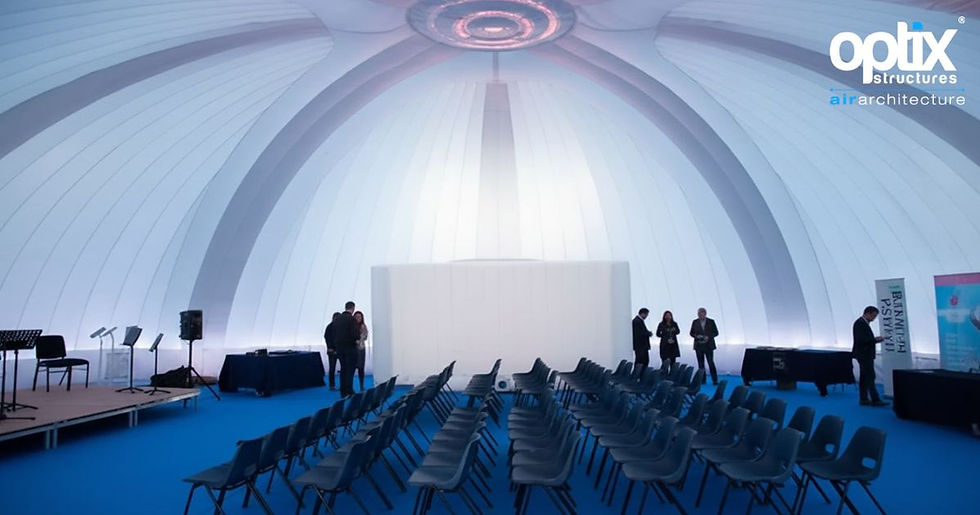
Weather protection may bring guests inside, but interior quality shapes their experience. Optix lists hard flooring, carpet or alternative finishes, freestanding glazed doors, and colour-selective lighting for its Domes. Unlike rigid buildings built around insulated panels, inflatable event structures require the shell and interior package to be planned together around the corporate brief.
Hard flooring can provide a more resolved base for furniture and visitor movement. Glazed doors define the entrance, while coloured lighting can support corporate identity or zone recognition. However, an inflatable Dome shouldn't be described as using fully insulated panels or as climate controlled unless the actual project specification confirms suitable temperature-management equipment.
Comfort Means More Than Shelter
Temperature, occupancy, entrance positioning, lighting, furniture, AV equipment, circulation, and event duration all influence comfort. The strongest temporary venues coordinate these elements from the beginning. That approach creates a coherent guest experience rather than treating flooring, doors, lighting, branding, and production as unrelated extras added after installation.
How Can You Brand a Dome Shelter for Maximum Corporate Impact?
A Dome's scale creates an immediate opportunity for corporate identity. Optix documents colour lighting, spotlight branding, temporary applied graphics, removable printed covers, projection, and direct printing. The right treatment depends on the structure, hire or purchase route, artwork, campaign duration, and the amount of visual change required between events.
Effective branding starts with recognition rather than decoration. Visitors should quickly understand whose event they have reached, where to enter, and what happens inside. A printed cover can deliver broad visual ownership, while temporary graphics support changing campaigns. Projection introduces moving content. None of these methods alone proves an eco-friendly design without supporting evidence.
Build Recognition Before Decoration
Large logos can help identification from a distance, while entrance graphics improve wayfinding. Interior content can then introduce product messages, presentations, or campaign detail. That layered approach reduces visual clutter and creates a clearer brand journey. Explore Optix Inflatable Branding Options for supported treatments.
Where Do Weatherproof Dome Shelters Work Best for Corporate Brands?
A weatherproof dome shelter delivers the most value when temporary architecture supports a clear commercial purpose. Optix identifies applications including conferences, breakout sessions, roadshows, exhibitions, pop-up retail, registration, awards ceremonies, hospitality, and seasonal events. These environments suit brands, agencies, universities, venues, and production teams seeking flexible temporary space.
Configuration should follow the use case. A product launch may need demonstration space and controlled lighting. Registration prioritises visibility and throughput. Hospitality needs polished finishes and comfortable circulation. Roadshows place greater emphasis on repeat logistics. None of these automatically establishes year-round operation or universal all-season reliability without location-specific planning.
Product Launches, Roadshows and Corporate Activations
The strongest corporate Dome projects connect architecture with campaign purpose. Guests should recognise the destination before reading detailed signage. Inside, lighting, graphics, presentations, products, and staff can continue the same visual story. This continuity turns temporary shelter into a purposeful branded environment rather than an isolated piece of event equipment.
What Can the 20m Bath Spa University Dome Teach Event Planners?
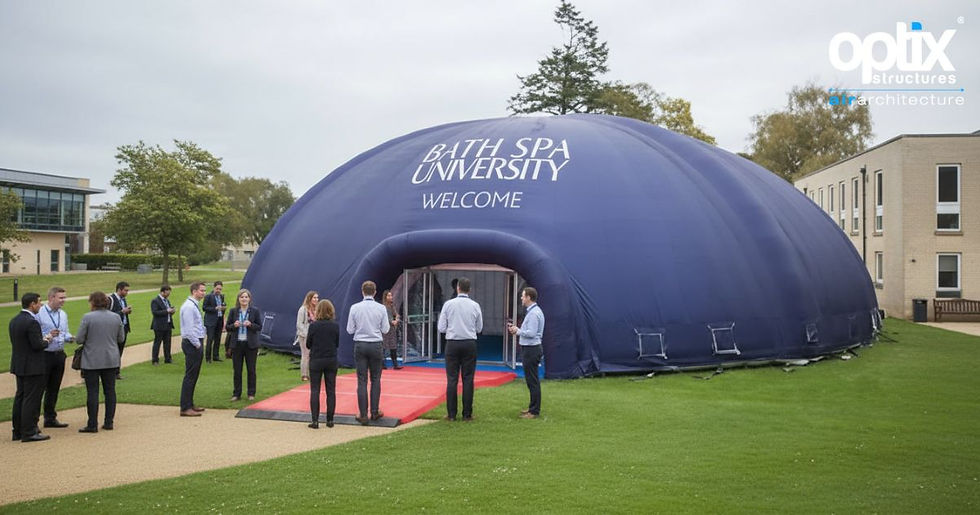
First-party case studies strengthen trust because they show how a real brief translated into a structure. Optix supplied Bath Spa University with a 20m Dome featuring a full printed cover, flooring, and carpet. It served open-day registration across two years, including one documented installation lasting more than a month.
The project also used remote-controlled LED lighting to produce a bright white glow or colours matching corporate guidelines. Optix states that the carpet was recycled after events. That is a specific sustainability detail, but it shouldn't become a universal eco-friendly design claim covering every product, material, or event delivered by the company.

Bath Spa University 20m Branded Dome Case Study
Optix describes the structure as the “main focus piece for registration”. That brief quotation matters because it explains the Dome's actual job without inventing attendance, ROI, storm performance, or visitor sentiment. Read the first-party Bath Spa University 20m Inflatable Dome Case Study for the documented project details.
Should You Rent, Buy or Commission a Custom Dome Shelter?
Optix lists its standard 6m through 24m Domes for rent or purchase, while custom sizes appear as purchase-only. Rental may suit a single conference, temporary activation, or changing campaign. Purchase can support recurring programmes. Bespoke commissioning becomes relevant when dimensions, branding, or operational requirements move beyond the standard range.
Ownership needs a broader calculation than purchase price. Transport, storage, inspections, cleaning, installation, maintenance, and graphic updates all affect long-term value. Buyers shouldn't assume minimal maintenance, long lifespan, 50 year lifespan, or unmatched strength and longevity without evidence tied specifically to the selected Dome and ownership programme.
Rent, Buy or Go Bespoke?
Think in campaigns rather than isolated invoices. Rental can reduce ownership responsibilities for occasional programmes, while purchase may suit recurring roadshows or annual events. Optix also describes managed ownership covering areas such as storage, logistics, installation, removal, cleaning, and maintenance. Explore Optix Inflatable Domes when comparing options.
A weatherproof dome shelter can protect more than an event programme. When correctly specified, it can support brand presentation, guest movement, production quality, and visual consistency. Dependable performance still comes from confirmed structural information, suitable sites, professional installation, appropriate technology, monitored weather, and sensible operating procedures.
Corporate planners should therefore separate evidence from search-engine language. Optix doesn't publish 180 mph winds, 265 psf snow loads, a 50 year lifespan, or a universal ability to seal out the weather for its standard Dome range. A stronger brief uses verified specifications, site information, audience requirements, branding objectives, and event-specific risk planning.
Frequently Asked Questions
Can a transparent garden dome actually handle serious weather?
It depends entirely on its verified design and installation. Optix corporate Domes are a different product category, with selected configurations carrying published wind figures up to 55 mph rather than an unrestricted stormproof claim.
Can a Hypedome / geodesic dome survive named UK and Irish storms like Eowyn or Eunice?
No Dome should be assumed safe during a named storm unless its own manufacturer and event plan confirm suitable operating conditions. Wind limits, exposure, restraint, forecasts, evacuation procedures, and site-specific decisions remain essential.
How much snow can a weatherproof / geodesic dome hold?
Snow performance varies by structure. Optix doesn't publish a universal snow load capacity for its standard Domes, so corporate organisers should request project-specific advice rather than importing figures from unrelated geodesic shelters.
Is a transparent garden dome rainproof in British weather?
A temporary structure shouldn't automatically be treated as completely rainproof under every condition. Properly specified event Domes can provide practical weather protection, but exposure, installation, site conditions, drainage, and confirmed operating limits still matter.
Are geodesic / weatherproof domes suitable for high winds, and how are they anchored?
They can be suitable within verified limits. Optix technology data lists ballasted wind figures up to 55 mph, while actual restraint arrangements depend on the selected structure, surface, site exposure, and project-specific installation requirements.


Comments