


How Semi-Permanent Inflatable Temporary Building Rooms Support Corporate Expansion
- Alex Ford

- Mar 14
- 7 min read
Corporate growth often demands space faster than traditional construction can deliver. Companies expanding operations across the USA and UK increasingly rely on semi-permanent inflatable structures to solve this challenge. These innovative facilities create flexible, semi-permanent inflatable temporary building rooms that function as offices, warehouses, training areas, or event venues. Built using durable membranes and advanced air-supported structures, they install rapidly while maintaining stability and comfort.

Many organisations choose these quick-installed inflatable temporary buildings because they reduce downtime and support business continuity. Modern designs also include climate-controlled insulated inflatables and adaptable interiors. As a result, corporations now view portable inflatable buildings as strategic infrastructure that supports expansion without the long delays or costs of permanent construction.
What Are Semi-Permanent Inflatable Temporary Buildings?
Modern businesses often need extra workspace quickly. Semi-permanent inflatable structures provide an innovative solution. These buildings rely on internal air pressure and engineered membranes to form stable walls and roofs. Unlike traditional construction, they do not require heavy steel frames or deep foundations. Many facilities also use air beam structures, which create strong internal support through pressurised tubes. This technology allows companies to deploy quick-installation inflatable temporary buildings within days rather than months.
Engineers design these structures using durable fabrics such as PVC-coated polyester. These materials resist UV exposure, moisture, and heavy winds. Some facilities also integrate insulated inflatables that maintain comfortable indoor temperatures during extreme weather. As a result, companies across the USA and UK use these buildings as offices, storage units, or project hubs. Large inflatable domes and modular halls now serve as reliable corporate workspaces that support long-term operations.
The Engineering Behind Inflatable Corporate Buildings
Inflatable buildings maintain their shape using controlled air pressure systems. High-efficiency blowers circulate air continuously, stabilising the structure and ensuring consistent internal pressure. This engineering approach allows large spans without internal columns. Companies often install wind-rated structures capable of handling challenging weather conditions while still delivering flexible workspace environments.
Why Businesses Are Turning to Semi-Permanent Inflatable Structures
Corporate leaders often face unexpected growth opportunities. New contracts, product launches, and large events require additional space immediately. Semi-permanent inflatable structures solve this problem by providing flexible facilities that can be installed quickly. Many organisations prefer these quick-install buildings because they reduce construction delays and help companies start operations faster.

Another advantage involves mobility and adaptability. Companies can relocate portable inflatable buildings when projects move to new locations. This flexibility supports industries such as logistics, technology, and manufacturing. Corporate event planners also benefit from these structures because they easily convert into temporary event shelters or meeting facilities for conferences and exhibitions.
Businesses also appreciate how bespoke inflatables adapt to specific operational needs. These customised structures can include partitions, lighting systems, and ventilation technology that match corporate requirements.
Key Benefits of Semi-Permanent Inflatable Temporary Building Rooms for Corporate Expansion
Rapid expansion often demands flexible infrastructure. Semi-permanent inflatable structures allow businesses to create new operational areas without expensive construction projects. These buildings support quick deployment and efficient use of space. Companies can transform large interiors into offices, storage areas, or production zones. Many corporations also use inflatable cubes to create modular meeting areas within larger buildings.
Energy efficiency represents another major benefit. Modern inflatable buildings use layered materials that improve insulation performance. Facilities often integrate insulated semi-permanent domes that maintain stable temperatures while reducing heating costs. These structures also allow interior layouts that include breakout rooms, collaboration areas, and quiet working environments.
The following table highlights the main advantages of inflatable corporate buildings.
Feature | Corporate Benefit | Business Impact |
Rapid deployment | Buildings install in days | Faster operational expansion |
Flexible design | Custom layouts and partitions | Efficient workspace planning |
Mobility | Structures can relocate | Long-term investment value |
Energy efficiency | Advanced insulation systems | Reduced operational costs |
Branding options | Custom graphics and lighting | Enhanced corporate presence |
Many corporations also use these spaces to create soundproof pods or quiet zones that support focused work during large corporate gatherings.
Common Corporate Uses of Inflatable Temporary Building Rooms
Corporate organisations use inflatable structures in many different ways. Many companies build operational offices using semi-permanent inflatable structures when their main facilities reach capacity. Others install temporary warehouses or equipment storage facilities during large expansion projects. These buildings also support internal operations such as employee training or research activities.
Event organisers frequently deploy inflatable spaces for conferences and exhibitions. Large conference structures provide flexible venues for business gatherings, product demonstrations, and industry trade shows. Some organisations also design specialised inflatable breakout rooms for conferences that allow teams to collaborate privately during large events.

Retail and marketing departments often use these buildings for promotional activities. Companies launch products, host brand activations, and build immersive corporate experiences inside these modern spaces. During holiday campaigns, some organisations even install themed environments such as Christmas grottos inside inflatable venues.
Types of Semi-Permanent Inflatable Structures for Businesses
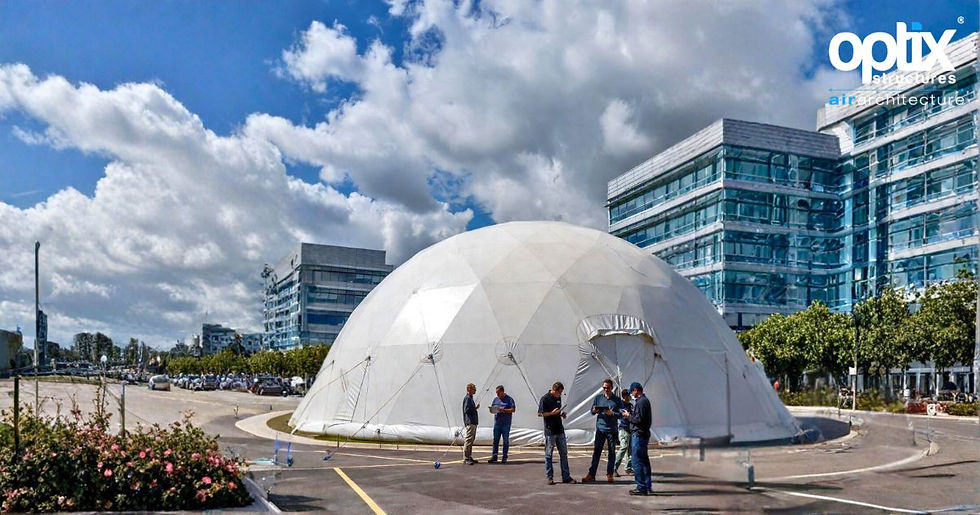
Corporate inflatable architecture includes several structural formats. Many companies prefer large inflatable domes because their curved shape distributes pressure evenly across the building. This design allows wide interior spaces without support columns. Businesses also deploy air-supported structures for logistics operations because they create expansive storage areas.
Some organisations install modular inflatable rooms inside larger structures. These rooms include soundproof pods, collaborative work zones, and dedicated meeting areas. Engineers often build specialised inflatable cubes that function as offices or presentation spaces. These cubes integrate lighting systems and acoustic materials that support professional work environments.
Below is a comparison of common inflatable building types used by corporations.
Structure Type | Typical Use | Key Advantage |
Inflatable Domes | Corporate venues or sports halls | Large column-free interiors |
Inflatable Cubes | Offices or meeting rooms | Modular workspace design |
Air Supported Structures | Warehouses and storage | Wide open space coverage |
Conference Structures | Corporate events | Professional event environments |
Portable Inflatable Buildings | Temporary offices | Easy relocation and installation |
These designs allow companies to choose structures that align perfectly with operational goals.
Customisation Options for Inflatable Corporate Structures
Customisation plays a major role in corporate inflatable architecture. Many companies request bespoke inflatables that reflect their brand identity and operational needs. Designers can incorporate company colours, logos, and lighting systems into the structure’s exterior surface. This approach transforms the building into a powerful marketing tool.
Interior customisation offers even greater flexibility. Engineers often divide large inflatable halls into multiple functional spaces. Organisations create breakout rooms, presentation zones, and networking lounges inside these buildings. Some companies also build acoustic environments using soundproof pods and quiet zones that allow employees to work without distraction.

Technology integration further improves functionality. Advanced climate systems help regulate temperature inside insulated inflatables, while LED lighting creates a professional atmosphere for corporate gatherings. These features transform inflatable buildings into modern and highly efficient work environments.
Installation Process of Semi-Permanent Inflatable Buildings
Installing semi-permanent inflatable structures follows a straightforward process. Engineers first prepare the ground surface and anchor points. This preparation ensures the structure remains stable during operation. Once the base system is ready, technicians deploy the fabric structure and activate high-capacity air blowers.
Within a short time, the building inflates and forms its final shape. This rapid setup process makes inflatable temporary buildings extremely attractive for corporate projects. Large facilities that normally require months of construction can become operational within days.
Interior systems are installed after inflation. Teams add lighting, electrical connections, climate equipment, and interior partitions. Optix Inflatable Structures is a UK-based manufacturer known for designing creative inflatable workspaces and exhibition structures. Their team develops custom inflatable environments for corporate events and temporary projects.
Industries That Benefit Most from Inflatable Temporary Buildings
Several industries rely heavily on inflatable buildings to support expansion. Logistics companies often deploy portable inflatable buildings when warehouse capacity must increase quickly. Manufacturing firms also use these facilities during equipment upgrades or factory renovations.
Corporate planners regularly install conference structures and temporary event shelters for exhibitions and product launches. These spaces create controlled environments that support presentations, networking sessions, and workshops.
Technology companies also use inflatable workspaces to create innovation hubs. Teams build modular offices with soundproof pods, breakout rooms, and collaborative zones. This flexible approach allows companies to redesign work environments without expensive renovations.
For large corporate exhibitions, event specialists frequently partner with Optix Inflatable Structures, which designs custom inflatable venues and exhibition environments for brands across multiple industries.
Are Permits Required for Semi-Permanent Inflatable Structures?
Regulations vary depending on location. In the USA and UK, most semi-permanent inflatable structures fall under temporary building guidelines. However, local authorities may still require safety inspections or planning approvals for large installations.
Engineers typically design these buildings according to strict safety standards. Many structures qualify as wind-rated structures capable of withstanding challenging weather conditions. Fire-retardant materials and reinforced fabrics further improve safety performance.
Corporate project teams usually coordinate with local planning departments before installation. This process ensures compliance with zoning rules, fire codes, and structural regulations. Professional manufacturers also provide documentation that confirms engineering certifications and safety performance.
The Future of Corporate Expansion with Inflatable Temporary Structures
Corporate infrastructure is changing rapidly. Businesses increasingly prefer flexible solutions rather than permanent buildings. Semi-permanent inflatable structures represent a major step toward adaptable architecture that grows alongside corporate operations.

Material technology continues to improve. Modern fabrics deliver stronger durability, better insulation, and longer life spans. Many advanced systems already last between 10 and 20 years when properly maintained. These improvements make inflatable architecture a serious alternative to traditional construction.
Experts believe inflatable buildings will play a key role in future workplaces. Large inflatable domes, modular workspaces, and customisable event structure environments allow companies to scale operations quickly. For organisations seeking rapid growth and flexible infrastructure, these innovative buildings offer a practical and powerful solution.
Frequently Asked Questions
What is a semi-permanent inflatable structure?
A semi-permanent inflatable structure is a durable air-supported building made from reinforced fabric that stays inflated to maintain shape and provides functional indoor space for business or events.
How long can semi-permanent inflatable buildings last?
With proper maintenance and quality materials, semi-permanent inflatable buildings can typically last 10 to 20 years depending on usage, environment, and structural design.
Do you need planning permission for temporary inflatable structures in the UK?
In many cases temporary inflatable structures do not require full planning permission in the UK, but larger installations or long-term use may require approval from the local planning authority.
What are the benefits of inflatable temporary buildings over traditional marquees?
Inflatable buildings offer stronger wind resistance, faster installation, better insulation, and larger column-free interiors compared to traditional marquees.
Can inflatable structures be used as semi-permanent meeting rooms or offices?
Yes, modern inflatable structures can be configured with lighting, HVAC systems, and partitions to function as comfortable meeting rooms, offices, or corporate workspaces.


Comments