


Why Are Brands Switching to Modular Bespoke Large Event Structures for Product Launches?

Modern product launches demand more than simple tents or fixed halls. Brands now rely on modular, bespoke, large event structure solutions to create striking spaces that adapt quickly and perform flawlessly. These structures blend flexibility with creativity, giving brands full control over layout, branding, and visitor flow.

Designed for high-impact launches, they support fast build times and reliable performance in real-world conditions. Many companies choose them for event structures that travel easily and fit changing venues. With growing use across temporary venues, trade shows, and outdoor showcases, this approach delivers smarter design, stronger engagement, and dependable results where first impressions truly matter.
What Are Modular Bespoke Large Event Structures?
Step into any major launch today and you’ll notice how spaces feel intentional. Modular bespoke large event structures combine modular buildings with custom design elements. Each structure uses prefabricated components that connect seamlessly. Yet the final look feels exclusive and brand-led. That balance makes them ideal for modern launches.
Unlike fixed temporary venues, these structures work across trade shows, pop-up exhibitions, and roadshows. Brands also deploy them at music festivals and sports events where timing and crowd flow matter. Their weatherproof construction keeps events safe. Their adaptable layouts fit urban plazas, open fields, or exhibition grounds.
Modular vs. Bespoke Event Structures
Traditional bespoke builds look impressive but come with limits. They require long build times and one-time use. Modular bespoke structures change that equation. They reuse core components while refreshing the outer skin. This approach delivers creativity without waste or delay.

The table below shows why brands now prefer modular bespoke systems over traditional bespoke builds.
Feature | Traditional Bespoke | Modular Bespoke Structures |
Setup time | Weeks | Days with fast installation |
Reusability | Single-use | Multi-event reuse |
Cost control | High risk | Predictable ROI |
Mobility | Fixed | Easy mobile setups |
Compliance | Site-specific | Multi-venue approved |
Why Customisation Matters in Product Launch Events
A launch is not just an announcement. It’s a story. Customisation lets brands control that story from entry to exit. Modular bespoke structures allow curved walls, layered textures, and lighting that matches product identity. That level of control strengthens recall and emotional connection.
In crowded exhibition halls, visual distinction matters. Brands use bespoke finishes, graphics, and spatial flow to guide attention. The result feels personal. Visitors feel invited rather than herded. That emotional link drives stronger engagement and post-event conversion.
Flexibility & Scalability: The Biggest Advantage of Modular Structures
Product launches rarely stay the same size. Some events explode with interest. Others remain intimate. Modular bespoke structures adjust easily. Sections expand or retract without structural compromise. This flexibility saves cost and prevents wasted space.

The same structure can serve a press launch today and a public showcase tomorrow. Brands reuse layouts across cities while adapting footprints. That scalability explains their popularity at outdoor concerts and touring activations where consistency meets variation.
Cost Efficiency & ROI: Why Brands Prefer Modular Bespoke Solutions
Budget pressure affects every marketing team. Modular bespoke systems reduce long-term spending. Brands invest once and reuse many times. Storage, transport, and setup costs stay controlled. That efficiency improves ROI without sacrificing impact.
Optix Inflatable Structures designs systems that balance durability with creativity. Their reusable frameworks lower waste while maintaining premium appeal. For brands planning annual launches, this approach turns infrastructure into a long-term asset rather than a sunk cost.
Speed of Installation & Logistics for Large-Scale Product Launches
Launch windows are unforgiving. Delays damage press coverage and attendance. Modular bespoke structures thrive under pressure. Teams assemble them quickly using lightweight components. Many builds are complete within days, not weeks.
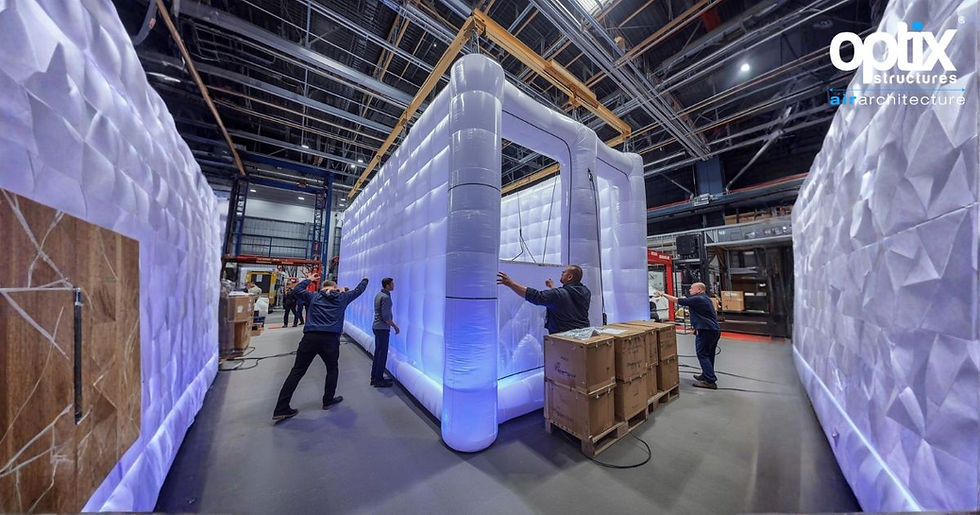
This speed simplifies logistics across borders. Structures ship flat and assemble on-site. Brands meet tight deadlines without heavy machinery. That reliability proves vital for global launches moving between the UK and USA markets.
Sustainability & Reusability in Modern Event Structures
Sustainability now influences brand perception. Modular bespoke systems support greener events through reuse and reduced material waste. Many designs integrate sustainable features like energy-efficient lighting and low-impact materials.
Reusable structures reduce landfill waste common with single-use builds. Brands also meet stricter environmental guidelines without compromising design quality. Sustainability stops being a marketing claim and becomes a visible action.
How Modular Bespoke Structures Enhance Brand Experience & Engagement
Experience shapes memory. Modular bespoke spaces create layered journeys. Visitors move through zones that stimulate sight, sound, and touch. This design approach builds an immersive experience rather than passive viewing.

Brands often integrate sensory spaces, quiet zones, and interactive demos. These features slow visitors down. Engagement deepens. Social sharing increases. Optix Inflatable Structures often supports this strategy using air roofs and inflatable walls that transform interiors without heavy builds.
Choosing the Right Event Structure Based on Brand Goals & Event Size
Every launch has different goals. Some prioritise media reach. Others focus on consumer trials. Modular bespoke structures adapt to both. Smaller launches benefit from compact designs. Large unveilings scale into multi-zone environments.
Audience flow, location, and duration shape decisions. Brands hosting product reveals inside cities favour lightweight structures. Those hosting outdoor events need higher load capacities and climate control. Matching structure to purpose prevents overspending and underperformance.
Why Leading Brands Are Switching to Modular Bespoke Event Structures
Leading brands choose certainty. Modular bespoke structures reduce risk while increasing creative control. They deliver turnkey solutions that simplify planning and execution. That reliability explains their dominance in brand activation campaigns worldwide.

From product reveals to temporary grandstands, these systems support bold ideas safely. Their design freedom empowers creativity without chaos. As launches grow more experiential, modular bespoke structures become the smart standard rather than the exception.
“The structure became part of the story, not just the setting.”
That mindset defines modern launches. And it explains why this shift continues to accelerate.
Frequently Asked Questions
What is a modular exhibition stand?
A modular exhibition stand is a reusable display system made from interchangeable components that can be reconfigured for different events and layouts.
Can modular exhibition stands be large?
Yes, modular exhibition stands can be very large and are often used for major product launches, trade shows, and multi-zone brand spaces.
Do modular stands look professional?
Absolutely. Modern modular stands feature high-quality finishes and custom branding that deliver a polished, premium appearance.
What is the difference between modular and bespoke structures?
Modular structures use reusable components for flexibility, while bespoke structures are custom-built for one-time use and specific designs.
How much does a large temporary event structure cost in the UK?
Costs typically range from £20,000 to over £100,000, depending on size, design complexity, materials, and duration of use.


Comments